
Author’s Note: Late last year, I entered a short story contest put on by NYC Midnight. The first round was in January with the results coming out on April 1. We were given a genre, character, and setting that had to be incorporated into a short story of 2500 words or less. We were given one week to write and submit our story. I was given Political Satire (Genre), A Diplomat (Character), and Food Poisoning (Setting). This was my first foray into writing fiction (that I actually let someone else read), so even though I didn’t get to the next round, the process and the feedback made it a good experience as a whole. The judges all said they really enjoyed the story but had a hard time with how it ended. (I’ll elaborate on that at the end of the story if you’re interested.)
So without further ado…Arlo, From Pomona.
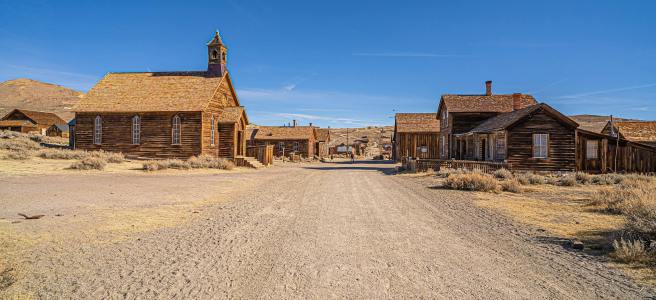
There’s no good reason for anyone outside of Texas to have heard of Pomona, and most people in the state couldn’t find it on a map. Its location near the middle of the state makes it an ideal location for people to settle down, but most folks choose to move on. The only reason anyone outside of Pomona may have heard of the obscure little town is because of the one time the citizens did something truly notable.
Just once.
Over the years as newcomers discovered Pomona, attempts were made to try to modernize and improve the economic conditions of the town. One idea called for annexing many miles of countryside and marking it for development. At the same time, the more established residents steadily became resistant to anything new or unfamiliar. Most of the older residents refused to approve any new infrastructure, like public water and sewer, that were needed to increase growth, and a stalemate ensued.
Small town political squabbles such as this may seem insignificant to outsiders, but to the parties involved, jockeying for position becomes a full-contact sport. When a stalemate occurs in politics, the status quo remains, for better or for worse.
That, in a nutshell, is the history of Pomona, repeated over and over, ad nauseum with every issue that comes up so that very little has ever changed and for the most part, the town has remained forgotten…just how the old-timers like it.
That is until a few years ago when word quickly spread, as word tends to do in small towns, that one of their own had made literal newspaper headlines:
Arlo Rivers, From Pomona, Texas Named Ambassador to Liechtenstein
The initial response to this news was predictable:
“Who the hell is Arlo Rivers?”
“Liechtenstein? Is that a real country?”
“Is this some kind of joke?”
Eventually, Pam, the barber/hairdresser/town gossip who many people trust with their lives and their hair, confirmed that she had some recollection of Arlo and that, yes, Liechtenstein is a real country. Then, the news finally settled in, and suddenly, a remarkable thing happened. Everyone seemed to “remember” Arlo and that they had, in fact, all been his best friend/preacher/teacher/acquaintance. All of them were now determined to take credit for his success.
After finding exactly one picture of Arlo in the school yearbook and digging up his high school transcript, the principal of Pomona High, Mr. Oddsocks, hailed Rivers as one of the top students who had ever matriculated through the school. “Credit must be given where it is due. Pomona High was a huge influence on Arlo and helped him achieve such a high status.” When asked by a national news reporter about his favorite memory of Arlo from his time in school, Mr. Oddsocks replied, “Er…well…There are so many memories to choose from. I’ll have to think about it and get back to you.”
Along the same lines, Praiseworthy Pete, the local pastor of the United Baptist Methodist Episopal All-Souls Church (UBMEAS, for short), confirmed through somewhat questionable recordkeeping that Arlo had been an active member of the church while he was growing up. “So of course,” said Pete, “God’s will is being done and He has lifted Arlo up to make an example of him for all to see. Like a city upon a hill. Praise and Glory!” No one wanted to question Pete about how a person could be a city, because what seemed like a reasonable question could easily be mistaken for blasphemy.
Even the mayor, Bart Bottomley, tried to gain some credit for Arlo’s success by claiming that his own leadership in local politics was such an inspiration that Rivers chose working in government as his vocation. The glaring problem with this, as everyone knew, was that Mayor Bottomley had only just been elected the year before and had moved to Pomona after Arlo was said to have graduated and moved on. No one wanted to correct Mayor Bottomley directly since he was their neighbor and most of them liked him and voted for him in the last election.
And on and on it went that everyone in Pomona not only knew Arlo well, they were somehow connected to him and responsible for his ascension to such a prestigious position in government. A job that many had no clue what it was. Oddly, no one sought out Arlo’s parents to ask their thoughts. That’s probably because just like with Arlo, no one could remember them or where they lived either.
Instead, factions in town argued with one another about who was most responsible for their favorite citizen’s fame. At last, Pam, ever the voice of reason, suggested that instead of bickering, they should put their energies into celebrating their hometown hero.
“Dinner on the grounds!”
“Yes, Pastor Pete, but it doesn’t need to be all churchy.”
“Let’s throw the biggest celebration party Pomona has ever had!”
And that’s what they did. Of course having the “biggest celebration in Pomona” isn’t saying much for a town of only a couple thousand souls. The church was the most obvious place to hold the function since they had the capacity to hold a largeish crowd. The few remaining Freethinkers, descendants of the city’s original founders, tried to raise their objections to the location, but no one really paid much attention to their antiquated ideas about religion, or lack thereof.
The bickering didn’t completely stop as they argued about decorations, food, date, and just about everything else, but since time was getting away from them (Arlo would leave for Liechtenstein soon!), agreements were made, tensions were eased, and plans were finalized. Now all they had to do was figure out how to get in touch with Arlo. Considering how many “friends” Arlo had in town, no one was quite sure how to reach him.
“Try the State Department,” someone said, but where such a sensible idea came from, no one could be sure. Probably Pam.
After assuring the powers that be at the State Department that they were in fact trying to celebrate their hero, and meant him no harm, Arlo was contacted through intermediaries and agreed to arrive at the arranged time and place.
On the appointed day, a crowd larger than anyone actually expected came to celebrate Arlo and his diplomatic appointment to the “L” country that many of the residents could not pronounce and nearly none of them could spell. For this reason, the banner at the celebration simply read,
We’re Proud of You!
since they couldn’t agree on the correct way to spell “Congratulations!” either.
On the big day everyone was anticipating Arlo’s arrival, but since they were having a hard time remembering what he looked like, no one was sure if they’d know when he got there.
“He’ll probably be wearing a suit.”
“And he’ll get here in a fancy car.”
“He’ll be all grown up from what we remember anyway. Surely he will let us know when he gets here.”
Arlo was, as they suspected, wearing a crisp, gray suit, and he arrived in a relatively new black Cadillac with little American flags on the front, like you see in movies. All agreed it was most definitely a fancy car.
And so the festivities began.
Everyone wanted a piece of Arlo, figuratively, of course. Pictures were taken. Babies were held and kissed. Signatures were signed. And words were spoken which caused tempers to flare. Since all of the various groups claimed Arlo’s fame as their own, representatives of each division thought they should be the ones sitting next to Arlo and entertaining him.
Arlo spent much of the day just trying to keep the peace, which is probably good practice for a newly christened ambassador.
Dinner on the grounds, outside in the Texas heat, is never exactly a sanitary affair. Food temperatures are neglected as the festivities drag on. The sooner you eat, the better since the food is fresher that way. But these types of affairs are first and foremost social occasions, so the food isn’t always consumed right away.
By the time Arlo was actually able to sit and eat, the food had been sitting out for several hours. Someone did offer to go inside and get him something fresh to eat once he was ready, but Arlo was so famished he just ate the first hotdog he was given. It tasted fine to him, so much so that he had about three more.
For the final part of the celebration, someone brought out a large chocolate cake to cap off the event, and a local rancher, Dusty Bottoms, brought out a vat of milk from his prized cow just for Arlo to wash down his chocolate cake.
“Just milked’er this mornin’. Ain’t gettin’ any fresher’n that.”
Cake was eaten. Milk was drunk (but only by Arlo). And the festivities wound down so that their hero could say his farewells and go assume his new post.
This should be where the story ends, but that was only true for one.
In all the commotion, no one bothered to think through or inquire WHY they couldn’t remember Arlo Rivers from his time growing up in Pomona. If they had tried to find out, the townsfolk may have been a little more careful around him. Or maybe not.
Early in Arlo’s life, he was diagnosed with an autoimmune disorder that kept him either bedridden or in the hospital for most of his childhood. To keep his mind off his condition, he threw himself into his school work, and while he was technically enrolled in the local school, he mostly taught himself through reading and application. He really was a brilliant but sickly child.
Arlo’s parents tended toward religion at first, but when the praying didn’t help, they gave up on going to church and opted to stay home and take care of their only child. Once Arlo was grown, his parents were sad about the lack of support they found from folks in town and were turned off by all of the constant feuds. They moved away as soon as they could.
Arlo’s saving grace was that as he was finishing at Pomona High, his doctors finally found an immunosuppressant that worked well for him with the only real side effect being a weakened immune system. He just needed to be careful.
But it was hard to be careful all the time.
Listeriosis is a bacterial infection that has harmful, sometimes fatal, effects on people with weakened immune systems. One of the primary causes of listeriosis is consumption of unpasteurized milk and/or contaminated “ready-to-eat” foods like hot dogs. Arlo consumed both in large quantities on the day of his celebration.
Arlo’s Celebration of Life/funeral was a beautiful affair. Many in Pomona consider it the second biggest event in the town’s history, surpassed only by the previous celebration for Arlo a couple of weeks before. The various factions who just weeks before were fawning over Arlo and claiming him as their own, were curiously silent as they tried to digest exactly what happened.
Pomona did manage to make national headlines just this once for inadvertently killing off their only famous resident. Most folks in Pomona were too shocked by the incident to be embarrassed at what happened. Since most people have short attention spans, the national attention wore off, people went on with their business, and Pomona wound its way back into obscurity.
Note about the judges’ feedback: So all three of the judges wrote that the really liked to story and the elements in it. They just had one big issue. Why’d Arlo drink the milk if he knew it’d make him sick? While I understand the criticism (it’s not wrong.), the whole story is satire. Mostly none of it is actually plausible, but…whatever. It was fun to write. I hope you enjoyed it.
As always, thanks for reading! Be sure to subscribe for more mind-numbing content.

 Reflections Of A Middle Aged Nobody